Laos travel guide: temples, history and things to do
ລາວ
Laos is the only landlocked country in Southeast Asia, and the Mekong River runs through almost all of its history. In 1353 Fa Ngum founded the kingdom of Lan Xang — the “land of a million elephants” — with its first capital at Luang Prabang. Around 1560 King Setthathirath moved the capital south to Vientiane, and most of the temples you will see in both cities trace back to these two reigns.
This guide covers twenty-eight places across nine areas: the old royal town of Luang Prabang (a UNESCO World Heritage Site since 1995) and the river villages to its north, the forests and hill villages of Luang Namtha, the karst country of Vang Vieng, the golden stupa and temples of Vientiane, the mysterious Plain of Jars and the old Phuan capital of Muang Khoun, the wartime caves of Vieng Xay, the river cave of Kong Lor, the old stupas and river towns of Thakhek and Savannakhet, and in the far south the Khmer-era temple of Vat Phou, the Bolaven Plateau and the 4,000 Islands of the Mekong.
Map of Laos
Tap an area to see its places.
Your position stays on this phone: it is not sent anywhere or saved.
Luang Prabang
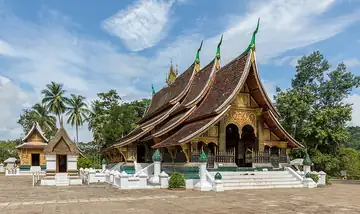 1Wat Xieng ThongວັດຊຽງທອງLuang PrabangThe royal temple of Luang Prabang, with sweeping roofs and a glittering “tree of life” mosaic.
 2Royal Palace Museum (Haw Kham)ຫໍຄຳLuang PrabangThe last kings' palace, now a museum — and home of the Phra Bang, the Buddha image that gave Luang Prabang its name.
 3Mount Phou SiພູສີLuang PrabangThe hill in the middle of Luang Prabang, crowned by a golden stupa and the town's favourite sunset view.
 4Morning Alms Round (Tak Bat)ຕັກບາດLuang PrabangAt dawn, lines of monks walk Luang Prabang's old town to receive sticky rice from kneeling residents.
 5Luang Prabang Night Marketຕະຫຼາດມືດ ຫຼວງພະບາງLuang PrabangEvery evening the main street fills with red-roofed stalls of Hmong embroidery, textiles and crafts, with a lane of street food beside it.
 6Kuang Si FallsຕາດກວາງຊີLuang PrabangTiered limestone cascades and turquoise pools in the forest south-west of Luang Prabang.
 7Pak Ou Cavesຖ້ຳຕິ່ງLuang PrabangTwo river caves filled with thousands of Buddha images, reached by boat up the Mekong.
 8Nong KhiawໜອງຂຽວLuang PrabangA village on the Nam Ou river, framed by steep green karst mountains, in the north of Luang Prabang province.
Luang Namtha

Vang Vieng

Vientiane
 11Pha That LuangພະທາດຫຼວງVientianeThe great golden stupa of Vientiane and the national symbol of Laos.
 12Haw Phra Kaewຫໍພະແກ້ວVientianeThe royal temple built in 1565 for the Emerald Buddha, now a museum of Lao Buddhist art.
 13Wat Si SaketວັດສີສະເກດVientianeThe oldest temple still standing in Vientiane, its cloister lined with thousands of small Buddha images.
 14That Dam (Black Stupa)ທາດດຳVientianeA weathered brick stupa on a quiet roundabout in central Vientiane, wrapped in legends of a guardian naga.
 15Patuxai (Victory Gate)ປະຕູໄຊVientianeVientiane's victory monument — an arch with Lao decoration and a view from the top.
 16Buddha Park (Xieng Khuan)ສວນພະ (ຊຽງຄວນ)VientianeA riverside garden of more than 200 concrete statues of Buddhist and Hindu figures, about 25 km south-east of Vientiane.
Xiengkhouang


Houaphanh

Khammouane
 20Thakhek Old Townທ່າແຂກKhammouaneA quiet Mekong town of old shophouses and a fountain square — and the start of the famous motorbike loop through karst and caves.
 21That SikhottabongພະທາດສີໂຄດຕະບອງKhammouaneThe most sacred stupa of central Laos, on the Mekong bank south of Thakhek — about 29 m tall, with a gilded spire.
 22Kong Lor Caveຖ້ຳກອງລໍKhammouaneA river cave about 7.5 km long that runs right through a limestone mountain, crossed by longtail boat.
Savannakhet


Champasak
 25Vat PhouວັດພູChampasakA Khmer-era mountain temple in southern Laos, older than Angkor Wat and a World Heritage Site.
 26Bolaven Plateau & Tad Faneພູພຽງບໍລະເວນ (ຕາດຟານ)ChampasakA cool highland of coffee farms and waterfalls east of Pakse; at Tad Fane twin falls drop about 120 m into the jungle.
 27Si Phan Don (4,000 Islands)ສີ່ພັນດອນChampasakNear the Cambodian border the Mekong spreads into countless islands and channels; slow days on Don Det and Don Khon.
 28Khone Phapheng Fallsນ້ຳຕົກຄອນພະເພັງChampasakThe Mekong's mightiest waterfall: the Khone falls, measured across all their channels, are the widest in the world.
Before you go
- Best time to go
- The dry season, roughly November to April, is the easiest time to travel; November to February is the coolest. The rainy season (about May to October) is greener and quieter but some roads are slow.
- Getting there from Thailand
- Most people cross at the Friendship Bridge between Nong Khai and Vientiane, or fly. Trains run from Bangkok to Vientiane, and the Laos–China Railway links Vientiane with Luang Prabang in about two hours. Check current entry rules and timetables before you go — they change.
- Temple manners
- Cover shoulders and knees, take off shoes where others do, and never touch a monk if you are a woman. At the morning alms round in Luang Prabang, watch quietly from a distance and do not use flash.
- Safety
- Unexploded ordnance from the 1964–1973 bombing still lies in parts of the countryside, especially around Xiengkhouang. Stay on marked paths.